
A new path
to sustained
recovery
Building Self-Sufficiency
The new 30,000-square-foot building has 16 two- and four-bedroom apartments, common areas to include laundry and community rooms, meeting and mentoring spaces for new programming to support women in recovery as they rebuild their lives and families, and a redesigned Recovery Courtyard with gathering spaces to accommodate more women and children.
LIVING
16 apartments
Kitchen range + hood + oven
Refrigerator
Dishwasher
COMMUNITY
Commercial washers and dryers
Assembly room (70 seats)
Classroom (20 seats)
Recovery Courtyard
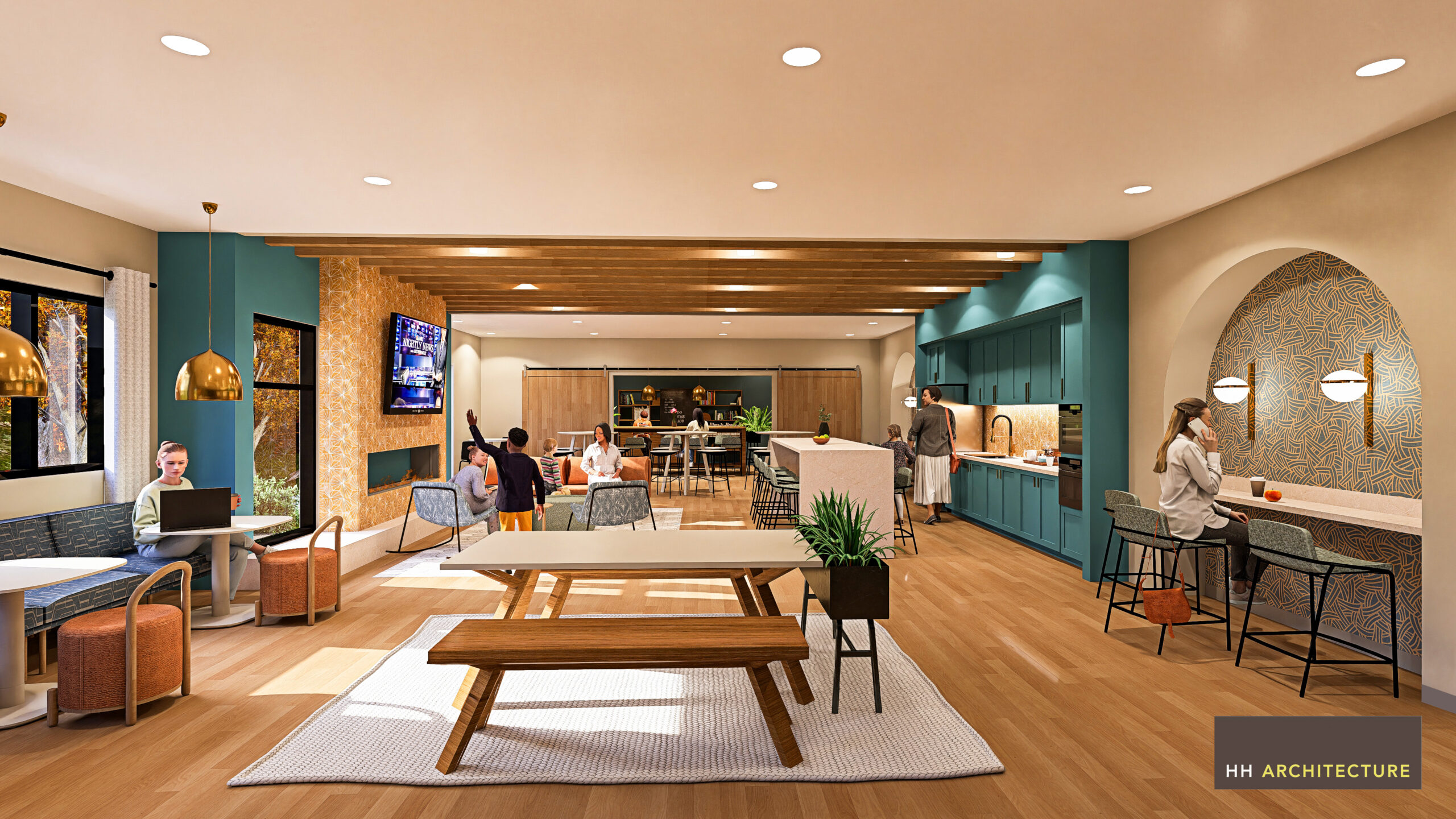
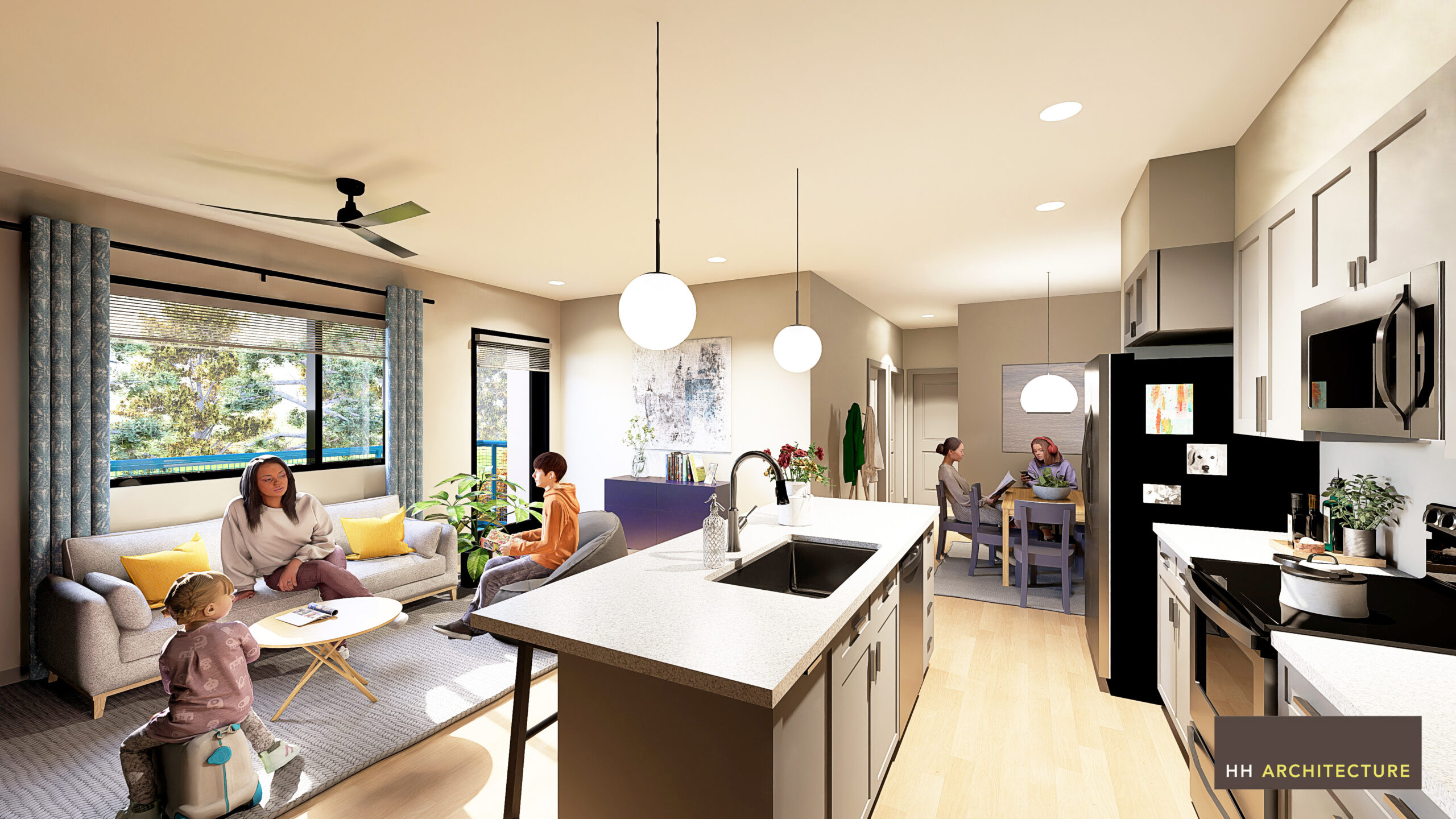
Renderings of the community room (top) and an apartment living space. (bottom).
Why Recovery Housing?
Research from the Recovery Research Institute and the National Council for Behavioral Health shows recovery housing is associated with better outcomes, including substantially better abstinence rates, higher income, and increased employment. In Wake County, a successful model for recovery housing exists at Job’s Journey, a partnership with Passage Home, that offers Healing Transitions alumni affordable apartment-style housing with a shared recovery culture. However, space is limited, is only for single adults, and is located far from the Women’s Campus.
Since 2018, an average of 20 women have earned their Silver Chip at Healing Transitions each year; 25% of those seek housing that accommodates children. The challenges mount when children have special needs, are too old for partner housing, or transportation and schooling issues restrict a family’s location options. Nearly 50% of the women at Healing Transitions are between 21-40 years of age.
We’re taking the initiative.
Healing Transitions is taking the initiative to provide housing for women in recovery because:
Women face unique stressors and barriers to maintaining their recovery, especially single mothers reuniting with their children.
As alumnae strive to build financial and emotional stability and establish healthy relationships with peers and partners, they are more successful when supported by others in recovery. Their children are more likely to find supportive relationships among families living in recovery where they experience camaraderie, accountability, and access to resources.
A crisis in affordable rental housing compels us to innovate.
Healing Transitions’ recovery housing for women will not solve the affordable housing problem in Wake County. But new housing that specifically supports women in recovery, on existing Healing Transitions property, offers women an affordable start to sustaining long-term recovery.
Healing Transitions will soon have more alumnae.
Healing Transitions has offered recovery, overnight shelter, non-medical detox, and other support services at no cost to more than 7,650 women since the Women’s Campus opened in 2006 with 88 beds. Later this year, the program will increase its capacity to 210 beds. Soon more women in our community will know the freedom of recovery.
Women can show others hope for a better life.
New participants in the residential recovery program next door will see the promise that awaits as they witness alumnae rebuilding their lives in sustained recovery. Today, alumnae typically live miles away, a barrier to this important role modeling.

The Need is Critical
RECOVERY HOUSING FOR WOMEN
Housing in Wake County
Wake County Department of Housing data show that rapid population growth is outpacing housing production and housing costs are escalating beyond household incomes. Housing that is considered affordable at area median income (AMI) thresholds is disappearing, and those most vulnerable to housing insecurity – including an alarming number of children experiencing homelessness – are in crisis.
AN INNOVATIVE SOLUTION IS KEY
Women face unique stressors and barriers to maintaining their recovery, especially single mothers reuniting with their children. Women in recovery are working to build financial independence, emotional stability, and healthy relationships with peers, partners, and family members. As they juggle the responsibilities of jobs and caring for their families, support from people who understand life in recovery makes a difference. The support extends to the children, who experience camaraderie and understanding among other families living in recovery. Recovery housing offers resources for rebuilding trust and accountability as children learn new family dynamics.
Recovery Housing
ADDRESSING UNIQUE CHALLENGES OF WOMEN IN RECOVERY

Research from the Recovery Research Institute and the National Council for Behavioral Health indicates that recovery housing is associated with positive outcomes, including reduced probability of relapse, lower rates of incarceration, higher income, increased employment, and improved family functioning. Studies calculating the economic costs and benefits of establishing recovery homes have overwhelmingly found that the benefits far outweigh the costs.
Many people in early recovery return to environments that foster addictive lifestyles, increasing the likelihood of relapse or continued substance use. Recovery housing is designed to support the unique needs of persons in recovery by providing a safe environment with the support of peers who are pursuing the same goals for sustained recovery.

Women have few options for affordable, recovery-oriented housing. Healing Transitions works with community partners to help alumnae find safe housing as they graduate from the program. Affordable, apartment-style housing that supports women in recovery and women with children is very difficult to find. Most options are not specifically recovery-oriented, and those that are recovery-oriented are shared housing environments. There are few places for women reunifying with their children.
Recovery-oriented housing on Healing Transitions Women’s Campus is an innovative solution to address critical housing needs among alumnae and the unique challenges of women in recovery.